
Brownout Ready
The lights go out, the fan winds down, and then the power comes back all at once. A little preparation makes both halves of a brownout easier on the house.
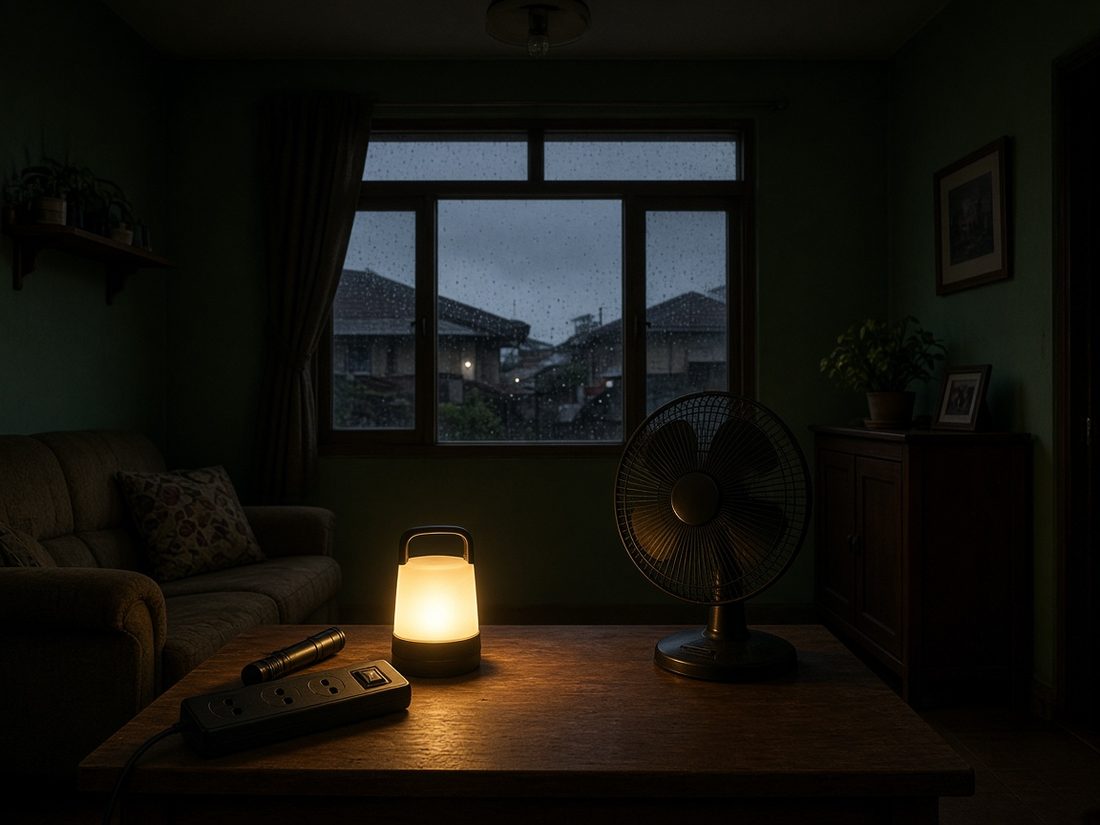
Scheduled and unscheduled
Distribution utilities and electric cooperatives announce scheduled maintenance interruptions in advance, usually by area and time window. During the hot months, grid alerts can also lead to rotating interruptions at short notice. Follow your own utility’s advisories, and note that a scheduled window is an estimate rather than a promise.
Before
- Find the main breaker, label it, and keep a flashlight beside the panel.
- Charge rechargeable lamps, power banks and phones when an interruption is announced.
- Know which outlets your router, refrigerator and medical devices use.
- Keep the refrigerator and freezer closed; a full freezer holds cold longer.
During
- Switch off or unplug aircon, refrigerators, washing machines and computers so they do not all restart on the first surge.
- Leave one ordinary light switched on so you know when power returns.
- Prefer rechargeable lamps to candles. If you must use a candle, keep it away from curtains, and never leave it burning unattended.
- Never run a generator, charcoal stove or engine indoors or in a closed garage. Carbon monoxide has no smell.
When power returns
Give the supply a few minutes to settle, then switch large loads back on one at a time. Many aircon units are happier with a short wait before the compressor restarts. If you notice a burning smell, flickering that does not stop, or a breaker that will not stay on, leave things off and call an electrician.
AVRs, surge protectors and inverter appliances
An automatic voltage regulator evens out high or low voltage for the appliance behind it. It is not the same as surge protection, and it does nothing during a total outage. Many inverter appliances already tolerate a wide voltage range; check the manual before adding an AVR. A surge protective device at the panel, installed by an electrician, guards the whole house, while a small UPS keeps a router or computer running long enough to shut down cleanly.
Generators and backfeed
Never connect a generator by plugging it into a wall outlet. Power can flow backwards through the panel into the utility lines and injure workers repairing them. A generator that feeds house wiring needs a transfer switch installed by a licensed electrical practitioner. Otherwise, run appliances from the generator’s own outlets with suitable extension cords, and keep the set outdoors, away from windows.
Typhoons and floodwater
If flooding is coming and you can reach the panel while standing on dry ground, switch off the main before the water arrives. If water has already reached the panel or the floor around it, do not touch it; leave the area and contact your utility. After a flood, have the wiring, outlets and appliances inspected before anything is switched back on. Stay well away from fallen lines and report them; Meralco customers can call the 16211 hotline.
The bill after an outage month
An outage lowers the kilowatt-hours you use, but it does not remove the fixed and per-kWh charges that make up a bill: generation, transmission, system loss, distribution and the taxes and universal charges listed on the statement. Comparing kWh month to month, rather than the total in pesos, gives a clearer picture of what changed.